To me December is about family, extended family, friends, counting our blessings and giving to those less fortunate. Sometimes distance (location), weather (road conditions), illness and finances can make it difficult for all the family to gathered at the same time in one place - but sending a hand written card is priceless and the phone, face-time, or skype make it possible to be together (even if for a few minutes) when you can't be.
Here is a little reminder of why we celebrate in December...
CHRISTMAS
 The word Christmas comes from the old English "Cristes maesse" meaning Christ's Mass. The Holiday celebrates the birth of Jesus Christ. The actual birthday of Jesus is not known; therefore, the early Church Fathers in the 4th century fixed the day around the old Roman Saturnalia festival (17 - 21 December), a traditional pagan festivity. The first mention of the birthday of Jesus is from the year 354 AD. Gradually all Christian churches, accepted the date of December 25th.
In American/English tradition, Christmas Day itself is the day for opening gifts brought by jolly old St. Nick. Many of our current American ideals about the way Christmas ought to be, derive from the English Victorian Christmas, such as that described in Charles Dickens' "A Christmas Carol."
The custom of gift-giving on Christmas goes back to Roman festivals of Saturnalia and Kalends. The very first gifts were simple items such as twigs from a sacred grove as good luck emblems. Soon that escalated to food, small items of jewelry, candles, and statues of gods. To the early Church, gift-giving at this time was a pagan holdover and therefore severely frowned upon. However, people would not part with it, and some justification was found in the original gift giving of the Magi, and from figures such as St. Nicholas. By the middle ages gift giving was accepted. Before then it was more common to exchange gifts on New Year's Day or Twelfth Night.
SANTA CLAUS
 Santa Claus is known by British children as Father Christmas. Father Christmas, these days, is quite similar to the American Santa, but his direct ancestor is a certain pagan spirit who regularly appeared in medieval mummer's plays. The old-fashioned Father Christmas was depicted wearing long robes with sprigs of holly in his long white hair. Children write letters to Father Christmas detailing their requests, but instead of dropping them in the mailbox, the letters are tossed into the fireplace. The draft carries the letters up the chimney, and theoretically, Father Christmas reads the smoke. Gifts are opened Christmas afternoon.
From the English we get a story to explain the custom of hanging stockings from the mantelpiece. Father Christmas once dropped some gold coins while coming down the chimney. The coins would have fallen through the ash grate and been lost if they hadn't landed in a stocking that had been hung out to dry. Since that time children have continued to hang out stockings in hopes of finding them filled with gifts.
Greenery and Christmas Tree
 The hanging of greens, such as holly and ivy, is a British winter tradition with origins far before the Christian era. Greenery was probably used to lift sagging winter spirits and remind the people that spring was not far away. The custom of kissing under the mistletoe is descended from ancient Druid rites.
The decorating of Christmas trees, though primarily a German custom, has been widely popular in England since 1841 when Prince Albert had a Christmas tree set up in Windsor Castle for his wife Queen Victoria, and their children.
As I googled and read, refreshing my mind about all the various elements which together fill the month of December with celebrations ~ it was interesting to note all of these elements come together (originated) from different parts of the world. Perhaps in a simple way - December is a time when knowing or unknowingly we all come together - no matter our background, religious or non-religious beliefs.
Yes, opening a wonderfully wrapped box from a loved one is magical (and watching the excitement of small children as they tear into the wrapping is priceless), we do exchange gifts at the High Heeled Life home. But we are also remembering there is much more than opening gifts, in celebrating this time of year. One way we are trying to do this is - the children in our lives, along with their Christmas present from us - will be getting a special gift, inside will be a note with details on what was given to someone in need, instead of buying them (the child) another gift.
This year try not caving into the pressures of the media/society about more and bigger. Instead of emptying your wallet or swiping that plastic card, buy ONE gift with meaning. Spend time with family, loved ones and friends creating memories. Give a helping hand to those who truly need (shelter, food, clothing, friendship).
Here is a little reminder of why we celebrate in December...
CHRISTMAS
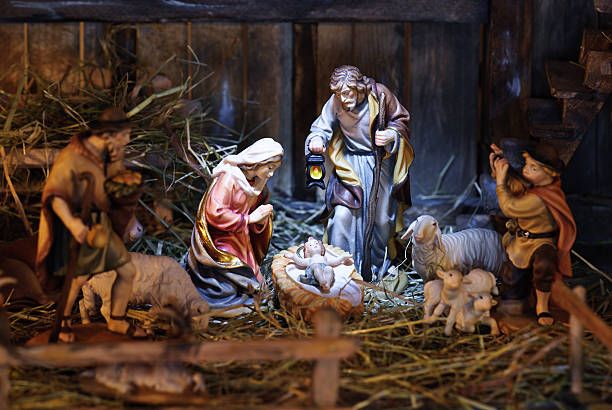
In American/English tradition, Christmas Day itself is the day for opening gifts brought by jolly old St. Nick. Many of our current American ideals about the way Christmas ought to be, derive from the English Victorian Christmas, such as that described in Charles Dickens' "A Christmas Carol."
The custom of gift-giving on Christmas goes back to Roman festivals of Saturnalia and Kalends. The very first gifts were simple items such as twigs from a sacred grove as good luck emblems. Soon that escalated to food, small items of jewelry, candles, and statues of gods. To the early Church, gift-giving at this time was a pagan holdover and therefore severely frowned upon. However, people would not part with it, and some justification was found in the original gift giving of the Magi, and from figures such as St. Nicholas. By the middle ages gift giving was accepted. Before then it was more common to exchange gifts on New Year's Day or Twelfth Night.
SANTA CLAUS

From the English we get a story to explain the custom of hanging stockings from the mantelpiece. Father Christmas once dropped some gold coins while coming down the chimney. The coins would have fallen through the ash grate and been lost if they hadn't landed in a stocking that had been hung out to dry. Since that time children have continued to hang out stockings in hopes of finding them filled with gifts.
Greenery and Christmas Tree
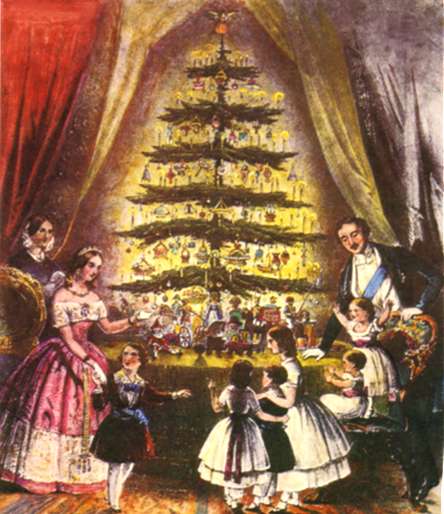
The decorating of Christmas trees, though primarily a German custom, has been widely popular in England since 1841 when Prince Albert had a Christmas tree set up in Windsor Castle for his wife Queen Victoria, and their children.
As I googled and read, refreshing my mind about all the various elements which together fill the month of December with celebrations ~ it was interesting to note all of these elements come together (originated) from different parts of the world. Perhaps in a simple way - December is a time when knowing or unknowingly we all come together - no matter our background, religious or non-religious beliefs.
Yes, opening a wonderfully wrapped box from a loved one is magical (and watching the excitement of small children as they tear into the wrapping is priceless), we do exchange gifts at the High Heeled Life home. But we are also remembering there is much more than opening gifts, in celebrating this time of year. One way we are trying to do this is - the children in our lives, along with their Christmas present from us - will be getting a special gift, inside will be a note with details on what was given to someone in need, instead of buying them (the child) another gift.
This year try not caving into the pressures of the media/society about more and bigger. Instead of emptying your wallet or swiping that plastic card, buy ONE gift with meaning. Spend time with family, loved ones and friends creating memories. Give a helping hand to those who truly need (shelter, food, clothing, friendship).
What ways do you help little ones understand why we celebrate Christmas, and that it's not just about getting/opening gifts?